
If a pilgrim makes a mistake during Hajj or Umrah, a penalty may become required depending on the type and seriousness of the mistake. This penalty is generally known as Fidyah, which means expiation or compensation for a shortcoming during pilgrimage.
Fidyah may become necessary when a pilgrim breaks a rule of Ihram, misses a wajib act of Hajj or Umrah, or violates the sanctity of the Haram.
The penalty may be:
- Badanah: Sacrificing a large animal such as a camel or cow.
- Damm: Sacrificing a sheep, goat or one share of a large animal.
- Sadaqah: Giving charity, often food or its monetary value.
- Fasting: Required in certain cases when a pilgrim cannot afford sacrifice.
Important note: Hajj and Umrah rulings can vary by school of Islamic law and by individual situation. This guide is for educational understanding. For a personal case, always consult a qualified scholar, Mufti or trusted Hajj/Umrah guide.
Why This Guide Matters
Hajj and Umrah are sacred journeys. Every pilgrim wants to perform the rites correctly, peacefully and with full acceptance from Allah. But mistakes can happen, especially for first-time pilgrims, elderly pilgrims, families, or people performing rituals in crowded conditions.
Many pilgrims panic when they accidentally use scented soap, forget a circuit of Sa’i, cut hair too early, cover their head in Ihram, or perform Tawaf without wudhu. The purpose of this guide is to explain the most common violations and penalties in a simple, user-friendly way.
What You Will Learn in This Guide
- What Fidyah means
- The difference between Damm, Sadaqah and Badanah
- Common Ihram mistakes
- Violations related to Tawaf, Sa’i, Mina, Arafat, Muzdalifah and Rami
- Which mistakes can be corrected by repeating the act
- When a pilgrim should seek scholarly guidance
What Is Fidyah in Hajj and Umrah?

Fidyah means expiation or compensation. In the context of Hajj and Umrah, it is a religious penalty that becomes due when a pilgrim makes certain mistakes, violates Ihram restrictions, misses wajib acts or commits prohibited actions within the Haram.
Fidyah is not meant to make a pilgrim feel hopeless. Rather, it is a way to correct a mistake, show humility before Allah and complete the journey with responsibility.
Simple Definition of Fidyah
Fidyah is the compensation a pilgrim gives when they break a pilgrimage rule or miss an obligatory requirement.
When Does Fidyah Become Required?
Fidyah may become required in three main situations:
- Violating Ihram rules: Examples include using perfume, cutting hair, clipping nails, covering the head for men, wearing fitted clothing for men or using scented products.
- Missing a wajib act: Examples include crossing Miqat without Ihram, missing required pelting at Jamarat, omitting required circuits of Tawaf or Sa’i, or delaying certain Hajj rites beyond their correct time.
- Violating the sanctity of the Haram: Examples include hunting, harming animals, cutting prohibited vegetation or damaging sacred boundaries.
Types of Penalties: Badanah, Damm and Sadaqah
Understanding the type of penalty is very important because not every mistake requires the same compensation.
| Penalty Type | Meaning | Usually Applies To |
|---|---|---|
| Badanah | Sacrifice of a large animal such as a camel or cow. | Very serious violations, especially certain sexual violations during Hajj. |
| Damm | Sacrifice of a sheep, goat or one share of a large animal. | Major Ihram violations and missed wajib acts. |
| Sadaqah | Charity, often food or its monetary value. | Smaller mistakes, partial violations or minor omissions. |
Badanah
Badanah is the sacrifice of a large animal, such as a camel or cow. It is usually required for very serious violations, especially certain sexual violations during Hajj. A large animal normally represents seven shares. Badanah is more serious than Damm.
Damm
Damm means sacrificing a small animal, such as a sheep or goat. It may also be fulfilled through one share of a large animal.
Damm is one of the most common penalties for major Ihram violations and missed wajib acts.
Common Cases Where Damm May Apply
- Crossing Miqat without Ihram and not returning to correct it
- Applying perfume to a large body area
- Wearing prohibited fitted clothing for men for a long period
- Cutting a significant amount of hair before the proper time
- Omitting essential rites such as Tawaf al-Umrah or Sa’i
- Missing Rami for a full day
- Leaving Arafat before sunset without returning
Sadaqah
Sadaqah means charity. It is usually required for smaller mistakes or partial violations.
Sadaqah may be given as food or its monetary value. Depending on the violation, it may be equivalent to Sadaqah al-Fitr, less than Sadaqah al-Fitr, or equivalent to the value of damage caused.
Common Cases Where Sadaqah May Apply
- Applying fragrance to a small body area
- Removing a small amount of hair
- Clipping fewer nails
- Missing fewer circuits of certain Tawaf or Sa’i
- Accidentally covering part of the head or face
- Omitting a small number of pebbles during Rami
What Should You Do Immediately After Making a Mistake?
If you think you made a mistake during Hajj or Umrah, follow these steps calmly and responsibly.
Step 1: Do Not Panic
Many mistakes can be corrected. Panic often leads to more confusion.
Step 2: Stop the Mistake Immediately
If you used scented soap, stop using it. If fragrance got on your Ihram, remove or wash it. If you are wearing prohibited clothing, change as soon as possible.
Step 3: Correct the Ritual If Possible
Some penalties are waived if the act is repeated correctly. For example, certain Tawaf or Sa’i mistakes can be corrected by repeating the ritual properly.
Step 4: Ask a Qualified Scholar
Do not rely only on random social media replies. Explain your exact situation clearly: what happened, when it happened, whether it was intentional, how long it lasted, and whether you corrected it.
Step 5: Pay the Penalty Properly
If Damm, Sadaqah or Badanah is required, arrange it through a reliable and trustworthy source.
Common Ihram Violations and Penalties
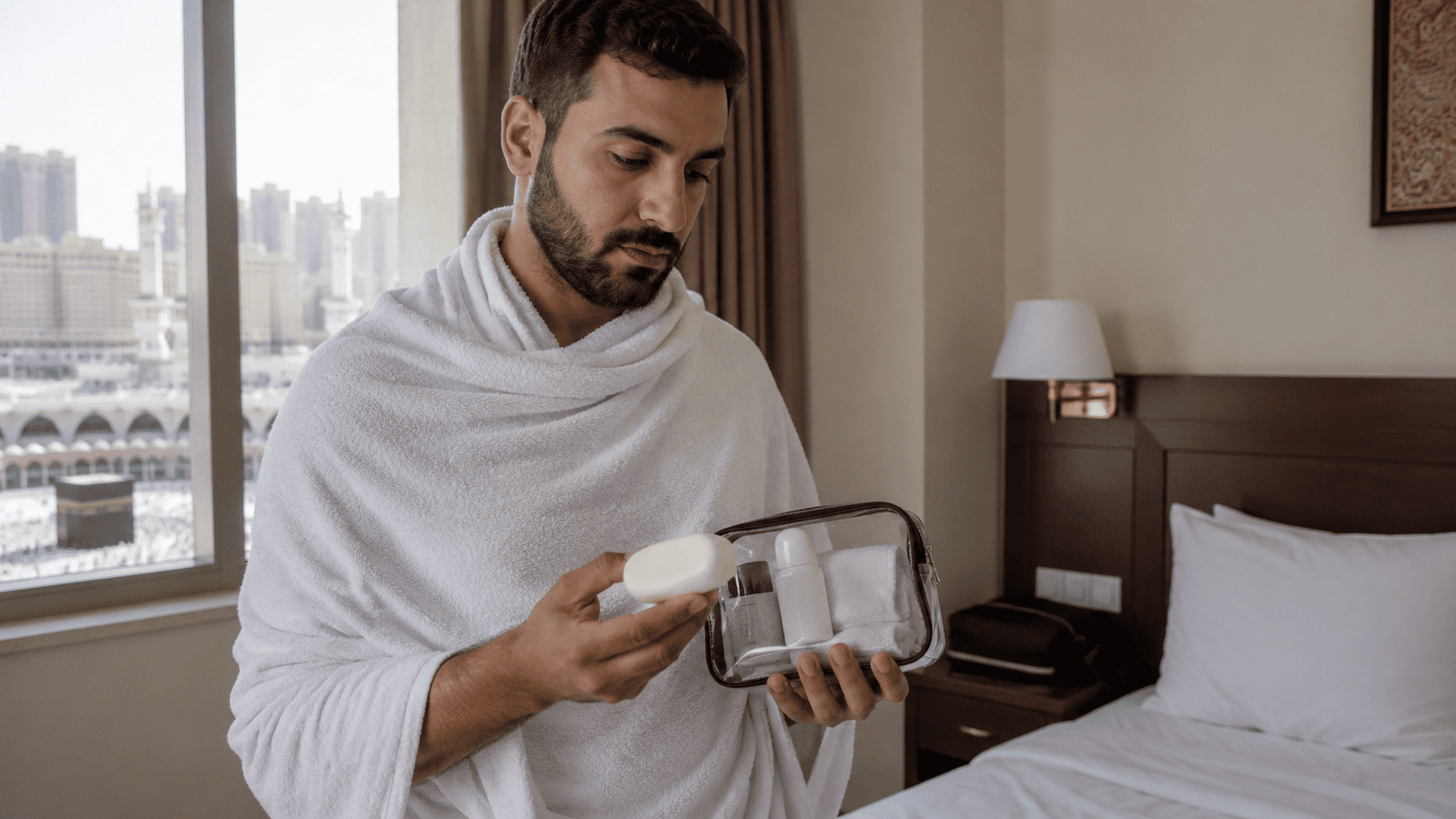
Ihram is not just two white sheets for men or modest clothing for women. It is a sacred state with special restrictions. Many Hajj and Umrah penalties happen because pilgrims misunderstand Ihram rules.
Crossing Miqat Without Ihram
The Miqat is the boundary where a pilgrim intending Hajj or Umrah must enter the state of Ihram.
Common Mistake
A pilgrim crosses Miqat without wearing Ihram or making the intention for Umrah or Hajj.
Usual Penalty
Damm may become required.
Can It Be Corrected?
Yes. If the pilgrim returns to the Miqat and enters Ihram correctly, the penalty may be waived.
Practical Tip
Before flying to Jeddah or travelling to Makkah, confirm your Miqat point with your airline, guide or scholar. Pilgrims arriving by air should prepare before the Miqat announcement.
Using Perfume or Fragrance in Ihram
Using fragrance is one of the most common Ihram violations.
Examples of Fragrance Violations
- Applying perfume
- Using scented tissue
- Using scented lotion
- Using scented oil
- Washing with fragranced soap
- Using scented deodorant
- Applying fragrance to Ihram clothing
Usual Penalty
If fragrance is applied to a large area of the body, Damm may become required. If it is applied to a small area, Sadaqah may become required.
Important Point
Even if the fragrance is washed off quickly, a penalty may still be due if the violation already occurred.
Practical Tip
Pack only unscented products for Ihram, including soap, shampoo, deodorant, wet wipes, petroleum jelly and moisturizer.
Fragrance on Ihram Clothing
A pilgrim should also avoid applying fragrance to Ihram clothing.
Common Mistake
Spraying perfume on Ihram sheets before or after wearing them.
Usual Penalty
If a large amount of fragrance is applied and the clothing is worn for a long period, Damm may become required. Smaller amounts or shorter usage may require Sadaqah.
Practical Tip
Wash Ihram garments with unscented detergent before travel. Avoid storing Ihram sheets with perfumes, attar bottles or scented laundry items.
Touching the Kaaba When Fragrance Is Present
Sometimes fragrance may be applied to parts of the Kaaba, Hajar al-Aswad, Rukn Yamani or Multazam.
Common Mistake
A pilgrim in Ihram touches or rubs against a fragranced area and fragrance transfers to the hands, face or body.
Usual Penalty
If a significant amount transfers, Damm may become required. If a small amount transfers, Sadaqah may become required.
Practical Tip
During Ihram, avoid touching fragranced areas. If needed, perform Istilam by gesturing toward Hajar al-Aswad from a distance.
Using Scented Soap, Shampoo or Wet Wipes
Many pilgrims unintentionally use hotel soap, shampoo or tissues while in Ihram.
Common Mistake
Washing hands with scented soap in the hotel or Haram washroom.
Usual Penalty
If fragrance is a dominant ingredient and it is used, Damm may become required. If the fragrance is not dominant, Sadaqah may apply, and repeated use can increase the seriousness.
Practical Tip
Carry a small unscented soap or sanitizing product clearly labelled “Ihram use only.”
Applying Henna or Kohl in Ihram
Henna and scented kohl can also become problematic in Ihram.
Common Mistake
Applying henna during Ihram, especially on the hands, head or beard.
Usual Penalty
Depending on the amount, thickness and duration, Damm or Sadaqah may become required.
Practical Tip
Apply henna before Ihram if needed. Avoid scented kohl during Ihram. Unscented kohl may be permissible according to many rulings, but confirm before use.
Wearing Stitched or Fitted Clothing for Men
This is one of the most misunderstood Ihram rules. For men, the issue is not simply “stitches.” The issue is clothing that is tailored to fit the shape of the body.
Prohibited for Men in Ihram
- Shirts
- Trousers
- Underwear
- Vests
- Jackets worn normally
- Socks
- Fitted garments that wrap around body parts like normal clothing
Allowed Items
- Stitched sandals
- Bags with stitches
- Money belts
- Waist pouches
- Safety belts
- Blankets that do not cover the head or face
Usual Penalty
If a man wears prohibited fitted clothing for 12 hours or more, Damm may become required. If worn for less time, Sadaqah may be required.
Practical Tip
Do not confuse “stitched” with “tailored.” A sandal with stitching is not the same as wearing trousers.
Footwear Rules for Men and Women
For Men
Men should avoid footwear that covers the ankle or the upper part of the foot.
For Women
Women may wear normal shoes and socks in Ihram.
Usual Penalty
If a man wears prohibited footwear for a long period, Damm may become required. Shorter periods may require Sadaqah.
Practical Tip
Men should use open sandals that expose the upper middle part of the foot and do not cover the ankles.
Covering the Head or Face in Ihram
For Men
Men must not cover the head or face with something normally used for covering, such as a cap, cloth, blanket or turban.
For Women
Women should not cover the face in a way that the covering touches the face. However, women may cover in a way that does not touch the face when needed for modesty.
Usual Penalty
Covering a significant part of the head or face for a long period may require Damm. Shorter or partial covering may require Sadaqah.
Allowed
Using an umbrella for shade is generally allowed if it does not rest on the head or face.
Practical Tip
During sleep, be careful that blankets do not cover the head or face while in Ihram.
Shaving, Cutting or Removing Hair
Hair removal is prohibited during Ihram until the correct time.
Common Mistakes
- Shaving before completing Umrah rites
- Cutting hair before Sa’i
- Trimming hair outside the Haram boundary when it should be done inside
- Removing body hair before exiting Ihram
- Combing hair aggressively and causing hair to fall
Usual Penalty
Removing a significant amount of head or beard hair may require Damm. Removing a smaller amount may require Sadaqah.
If a few strands fall naturally without action or due to illness, no penalty may be due.
Practical Tip
Avoid combing, scratching or grooming hair during Ihram unless necessary. After Sa’i, perform Halq or Taqsir properly to exit Ihram.
Clipping Nails in Ihram
Clipping nails is prohibited while in Ihram.
Common Mistake
Cutting nails after entering Ihram because they feel uncomfortable.
Usual Penalty
Clipping all nails of both hands and feet, or a significant number in one sitting, may require Damm. Clipping fewer nails may require Sadaqah for each nail.
Exception
Removing a broken nail may not incur a penalty if it is only removed because it is broken and causing difficulty.
Practical Tip
Clip nails before entering Ihram.
Sexual Relations and Intimacy
Sexual relations are among the most serious violations during Hajj and Umrah.
During Umrah
Sexual relations before completing the required Tawaf can invalidate Umrah and require Damm. The Umrah must still be completed and then repeated.
During Hajj
Sexual relations before standing at Arafat can invalidate Hajj and require Damm. The pilgrim must still complete the remaining Hajj rites and repeat Hajj later.
After Arafat but Before Certain Rites
In some cases, the Hajj remains valid but Badanah or Damm may be required depending on when the violation occurred.
Practical Tip
Couples should clearly understand intimacy restrictions before entering Ihram. Avoid private situations that may lead to desire while in Ihram.
Killing Lice, Locusts or Small Creatures
Some smaller violations relate to killing lice or locusts.
Usual Penalty
Killing more than a small number may require Sadaqah.
Practical Tip
Maintain hygiene before Ihram. If there is a medical or hygiene concern, ask a scholar or guide before acting.
Violations of the Haram
The Haram has its own sanctity. Some acts are prohibited in the sacred area whether a person is in Ihram or not.
Hunting in the Haram
Hunting is prohibited for a pilgrim in Ihram and also prohibited within the Haram boundary.
Common Violations
- Killing a prohibited animal
- Helping another person hunt
- Pointing out an animal to a hunter
- Injuring an animal
- Damaging eggs, wings or limbs
Usual Penalty
The penalty depends on the animal and harm caused. It may involve sacrificing a similar animal, giving charity equal to the value, or fasting in some cases.
Practical Tip
Do not harm animals in the Haram. Avoid chasing birds, disturbing nests or allowing children to throw things at animals.
Cutting Trees, Grass or Vegetation
Cutting prohibited vegetation inside the Haram is not allowed.
Common Violations
- Cutting grass
- Breaking branches
- Pulling plants
- Damaging trees
- Allowing animals to graze in prohibited areas
Usual Penalty
Sadaqah equivalent to the value of the vegetation may be required. If the vegetation belongs to someone, compensation to the owner may also apply.
Practical Tip
Do not pick plants, flowers, branches or grass inside the Haram boundary.
Tawaf Violations and Penalties

Tawaf is one of the most important acts of Hajj and Umrah. Mistakes in Tawaf are common because of crowding, confusion, tiredness or lack of preparation.
Tawaf al-Umrah
Tawaf al-Umrah is essential for Umrah.
Common Mistakes
- Performing Tawaf without wudhu
- Performing Tawaf in major ritual impurity
- Performing Tawaf during menstruation
- Using a wheelchair without a valid reason for most circuits
- Omitting Tawaf completely
Usual Penalty
Damm may become required.
Can It Be Corrected?
In many cases, repeating the Tawaf correctly can waive the penalty.
Practical Tip
Before Tawaf, check wudhu, clothing purity and physical readiness. If wudhu breaks, ask a scholar or guide how to continue or repeat.
Tawaf al-Qudum
Tawaf al-Qudum is generally Sunnah for certain Hajj pilgrims arriving from outside Miqat for Hajj al-Ifrad or Hajj al-Qiran.
Common Mistakes
- Performing without wudhu
- Missing circuits
- Performing in major impurity
Usual Penalty
Sadaqah may apply for fewer missed circuits or circuits without wudhu. Damm may apply for omitting four or more circuits or performing in major impurity.
Practical Tip
This Tawaf does not apply to every pilgrim. Confirm whether it applies to your Hajj type.
Tawaf al-Nafl
Tawaf al-Nafl is optional Tawaf.
Common Mistakes
- Performing without wudhu
- Missing circuits
- Walking through Hatim
- Using a wheelchair without a valid reason
- Exposing awrah to an extent that prayer would not be valid
Usual Penalty
Sadaqah or Damm may apply depending on the seriousness.
Practical Tip
Even optional worship should be performed with proper purity and respect.
Tawaf al-Ziyarah
Tawaf al-Ziyarah is one of the most important rites of Hajj.
Common Mistakes
- Delaying it beyond the correct time without valid reason
- Performing without wudhu
- Performing in major impurity
- Omitting circuits
- Using a wheelchair without valid reason
- Walking through Hatim
- Having relations before completing it
Usual Penalty
Depending on the mistake, Sadaqah, Damm or Badanah may apply.
Practical Tip
Plan Tawaf al-Ziyarah carefully. Women experiencing menstruation or postnatal bleeding should seek guidance because valid excuses can affect timing and penalties.
Tawaf al-Wadaa
Tawaf al-Wadaa is the farewell Tawaf.
Is Tawaf al-Wadaa Required for Umrah?
No, Tawaf al-Wadaa is not obligatory for those performing Umrah only.
Is It Required for Hajj?
It is obligatory for pilgrims coming from outside the Miqat boundary who perform Hajj.
Common Mistakes
- Omitting it completely
- Performing without wudhu
- Missing circuits
- Performing during menstruation or postnatal bleeding
Usual Penalty
Omitting it without valid excuse may require Damm. Missing fewer circuits or performing without wudhu may require Sadaqah.
Exception
Women in menstruation or postnatal bleeding may be excused if their departure cannot be delayed.
Sa’i Violations and Penalties
Sa’i is walking between Safa and Marwah seven times.
Common Mistakes in Sa’i
- Omitting Sa’i completely
- Missing four or more circuits
- Missing fewer than four circuits
- Using a wheelchair without valid reason
- Starting wheelchair use midway without valid reason
Usual Penalty
Omitting all seven circuits or four or more circuits may require Damm. Missing fewer circuits may require Sadaqah for each circuit.
Important Point
Sa’i without wudhu is valid and does not require a penalty.
Wheelchair Rule
Using a wheelchair due to illness, weakness, disability or genuine need does not incur a penalty.
Practical Tip
Count circuits carefully. Safa to Marwah is one circuit, and Marwah back to Safa is another circuit.
Mina, Arafat, Muzdalifah and Rami Violations
Hajj includes several time-sensitive rites. Missing or delaying these rites can result in penalties.
Mina and the Correct Sequence on 10 Dhul Hijjah
For Hajj al-Tamattu and Hajj al-Qiran, the correct sequence on 10 Dhul Hijjah is generally:
- Rami of Jamarah al-Aqaba
- Animal sacrifice
- Shaving or trimming the hair
Common Mistake
Changing the required order without valid reason.
Usual Penalty
Damm may become required.
Other Mina-Related Mistakes
- Delaying animal sacrifice beyond the required time
- Shaving or trimming outside the Haram boundary
- Delaying hair cutting beyond the proper time without excuse
Practical Tip
Follow your Hajj group schedule and ask before changing the order of rites.
Day of Arafat
Standing in Arafat is the central pillar of Hajj.
Common Mistakes
- Leaving Arafat for Muzdalifah before sunset without excuse
- Going directly from Arafat to Mina without performing Wuquf in Muzdalifah
Usual Penalty
Damm may become required.
Exception
Women, children, the elderly and the infirm may have concessions in certain cases.
Practical Tip
Do not leave Arafat early without clear instruction from a qualified Hajj guide.
Night of Muzdalifah
Muzdalifah is another essential stage of Hajj.
Common Mistakes
- Arriving after sunrise without valid reason
- Leaving before Fajr begins without valid reason
Usual Penalty
Damm may become required.
Can It Be Corrected?
If a person leaves early and returns before Fajr, the penalty may be waived. If they return after Fajr, the penalty may still remain.
Practical Tip
Follow official movement instructions, especially during crowd control. Ask your scholar or guide if your situation involves illness, weakness or official transport restrictions.
Rami: Pelting the Jamarat
Rami is the pelting of the Jamarat during Hajj.
Common Mistakes
- Missing Rami for a full day
- Missing pebbles
- Missing one Jamarah
- Pelting after the valid time
- Pelting on behalf of someone without valid excuse
- Forgetting your own Rami while performing it for someone else
Usual Penalty
Missing Rami for a full day may require Damm. Missing a small number of pebbles may require Sadaqah per pebble. Missing multiple Jamarat may require Damm.
Can Someone Else Do Rami for You?
Yes, but only with a valid excuse such as serious illness, old age, incapacity or genuine inability.
Practical Tip
Elderly and sick pilgrims should discuss Rami arrangements with their group leader before the day of pelting.
Common Umrah Mistakes and What They Usually Mean
| Common Umrah Mistake | What It Usually Means |
|---|---|
| Using scented soap in Ihram | This may require Sadaqah or Damm depending on the fragrance and usage. |
| Cutting hair before Sa’i | This may require Damm because hair should be cut only after completing the required rites. |
| Forgetting some Sa’i circuits | Missing fewer circuits may require Sadaqah, while missing four or more may require Damm unless corrected. |
| Performing Tawaf without wudhu | Tawaf should be performed with wudhu. In many cases, repeating it correctly can remove the penalty. |
| Wearing socks in Ihram for men | Men should avoid socks in Ihram. Wearing them for a long period may require Damm, while shorter usage may require Sadaqah. |
| Covering the head while sleeping | If the head or face becomes covered while sleeping, Sadaqah may be required depending on the situation. |
| Touching fragranced parts of the Kaaba | If fragrance transfers to the hands, face or body, Sadaqah or Damm may be required depending on the amount. |
Common Hajj Mistakes and What They Usually Mean
| Common Hajj Mistake | What It Usually Means |
|---|---|
| Missing Rami | Missing Rami for one day or more may require Damm. |
| Leaving Arafat before sunset | Leaving early without returning before sunset may require Damm. |
| Leaving Muzdalifah before Fajr | Leaving without valid excuse may require Damm unless corrected in time. |
| Delaying Tawaf al-Ziyarah | Delaying without valid reason may require Damm. |
| Missing Tawaf al-Wadaa | For eligible Hajj pilgrims, missing farewell Tawaf may require Damm. |
| Performing rites in the wrong order | For some Hajj types, changing the order of Rami, sacrifice and hair cutting may require Damm. |
Mistakes That Usually Do Not Require Penalty
Not every mistake requires Fidyah. Some actions may be disliked, incorrect or less ideal but may not require a penalty.
Examples That May Not Require Fidyah
- Hair falling naturally without action
- Wet dream during Ihram, although ghusl is required
- Using a wheelchair with valid medical reason
- Sa’i without wudhu
- Taking breaks during Sa’i
- Using an umbrella for shade if it does not rest on the head or face
- Removing a broken nail when necessary
- Wearing a stitched money belt or carrying a stitched bag
- Wearing sandals that have stitches but do not violate footwear rules
- Women wearing shoes or socks in Ihram
Always confirm your exact case because small details can change the ruling.
Prevention Checklist Before Entering Ihram
Use this checklist before making intention for Ihram:
- Clip nails before Ihram.
- Remove unwanted hair before Ihram if needed.
- Perform ghusl or wudhu.
- Use unscented soap and shampoo.
- Do not apply perfume after entering Ihram.
- Pack unscented wipes, soap and deodorant.
- Men should wear proper Ihram sheets and open sandals.
- Women should wear modest clothing and avoid face covering that touches the face.
- Confirm Miqat location.
- Learn the correct order of Umrah or Hajj rites.
- Keep a written dua and ritual checklist.
- Ask your guide before using a wheelchair without medical need.
- Avoid touching fragranced areas of the Kaaba while in Ihram.
What Information Should You Give a Scholar If You Made a Mistake?

When asking a scholar or Mufti, give complete details. Do not just ask, “Do I need Damm?”
Explain These Details Clearly
- Were you performing Hajj or Umrah?
- Which type of Hajj were you performing: Tamattu, Qiran or Ifrad?
- Were you in Ihram at the time?
- What exactly happened?
- Was it intentional, accidental or due to ignorance?
- How long did it continue?
- Did you repeat or correct the ritual?
- Were you sick, elderly, menstruating, disabled or under official crowd-control restrictions?
- Did the mistake happen inside or outside the Haram boundary?
- Did it happen before or after Tawaf, Sa’i, Rami, sacrifice or hair cutting?
The more accurate your explanation, the more accurate the ruling will be.
Frequently Asked Questions
What is Fidyah in Hajj and Umrah?
Fidyah is compensation or expiation required when a pilgrim breaks certain rules of Hajj or Umrah. It may be required for Ihram violations, missing wajib acts or violating the sanctity of the Haram.
What is the difference between Damm and Sadaqah?
Damm usually means sacrificing a sheep, goat or one share of a large animal. Sadaqah means giving charity, usually food or its value. Damm is generally for more serious mistakes, while Sadaqah is often for smaller or partial violations.
What is Badanah?
Badanah is the sacrifice of a large animal such as a camel or cow. It is required for very serious violations, especially certain sexual violations during Hajj.
Does every Umrah mistake require Damm?
No. Some mistakes require Damm, some require Sadaqah, some can be corrected by repeating the act properly, and some do not require any penalty.
Can a Tawaf mistake be corrected?
In many cases, yes. Some Tawaf penalties may be waived if the Tawaf is repeated correctly with purity and proper conditions.
Is wudhu required for Sa’i?
Sa’i without wudhu is valid and does not require a penalty. However, it is better to remain in a state of purity.
Can men wear stitched sandals in Ihram?
Yes, the issue is not stitching itself. Men must avoid footwear that covers the ankle or the upper part of the foot. Sandals with stitches are generally allowed if they meet Ihram footwear rules.
Can women wear socks and shoes in Ihram?
Yes, women may wear socks and shoes in Ihram.
Can I use deodorant in Ihram?
Scented deodorant should be avoided in Ihram. Use unscented deodorant only. If scented deodorant is used, Sadaqah or Damm may be required depending on the situation.
What happens if I cut my hair before completing Umrah?
Cutting hair before completing the required Umrah rites may require Damm. The exact ruling depends on when it happened and how much hair was removed.
What if my hair falls out naturally during Ihram?
If hair falls naturally without action, illness-related shedding or during sleep, no penalty may be due. If hair falls because of scratching, combing or pulling, Sadaqah may be required depending on the amount.
Is Tawaf al-Wadaa required for Umrah?
No. Tawaf al-Wadaa is not obligatory for someone performing Umrah only. It is required for certain Hajj pilgrims coming from outside the Miqat boundary.
Can an elderly pilgrim appoint someone for Rami?
Yes, an elderly, sick, infirm or incapacitated pilgrim may appoint someone to perform Rami on their behalf without penalty.
What if Hajj or Umrah becomes invalid?
If Hajj or Umrah is invalidated by a serious violation, the pilgrim must still complete the remaining rites, stay within Ihram restrictions until completion, pay the required penalty and repeat the pilgrimage later.
Who should calculate my exact Fidyah?
A qualified scholar, Mufti or reliable Hajj/Umrah authority should calculate your exact Fidyah based on your situation.
Final Advice for Pilgrims
Hajj and Umrah are journeys of mercy, humility and correction. Mistakes can happen, but a sincere pilgrim should not become hopeless. Learn the rules before travelling, ask questions when unsure, avoid unnecessary risks in Ihram and correct mistakes as soon as possible.
The best protection is preparation. Learn the basics of Ihram, Tawaf, Sa’i, Rami, Arafat, Muzdalifah and Mina before departure. Carry unscented products, follow your group leader, and consult knowledgeable scholars whenever a situation is unclear.
May Allah accept your Hajj and Umrah, forgive your shortcomings and grant you a blessed journey filled with ease, sincerity and acceptance. Ameen.