
Jabal-e-Uhud, also known as Mount Uhud, is one of the most important historical landmarks in Madinah. Standing roughly four kilometres north of Masjid an-Nabawi, this mountain witnessed one of the most significant events in early Islamic history: the Battle of Uhud.
For Muslims visiting Madinah during Umrah, Jabal-e-Uhud is more than a geographical attraction. It is a place connected with the courage of the companions, the leadership of Prophet Muhammad ﷺ, the sacrifice of the martyrs, and timeless lessons about obedience, patience and unity.
The Prophet Muhammad ﷺ also expressed his affection for this mountain, saying:
“This is a mountain that loves us and is loved by us.”
This narration is recorded in Sahih al-Bukhari and reflects the special connection between Jabal-e-Uhud, the Prophet ﷺ and the blessed city of Madinah. If you are planning your journey, our guide to the top places to visit in Makkah and Madinah during Umrah puts Mount Uhud in the context of the wider ziyarat trail.
Quick Facts About Jabal-e-Uhud
| Detail | Information |
|---|---|
| Location | North of Madinah, Saudi Arabia |
| Distance from Masjid an-Nabawi | Approximately 4 kilometres |
| Historical event | Battle of Uhud |
| Islamic year of the battle | 3 AH |
| Gregorian year | 625 CE |
| Muslim martyrs | Approximately 70 companions |
| Famous martyr | Hazrat Hamza ibn Abdul Muttalib رضي الله عنه |
| Nearby landmark | Jabal al-Rumah, also called Archers’ Hill |
| Visit status | Historical ziyarat, not a compulsory Umrah ritual |
Why Is Jabal-e-Uhud Important in Islamic History?
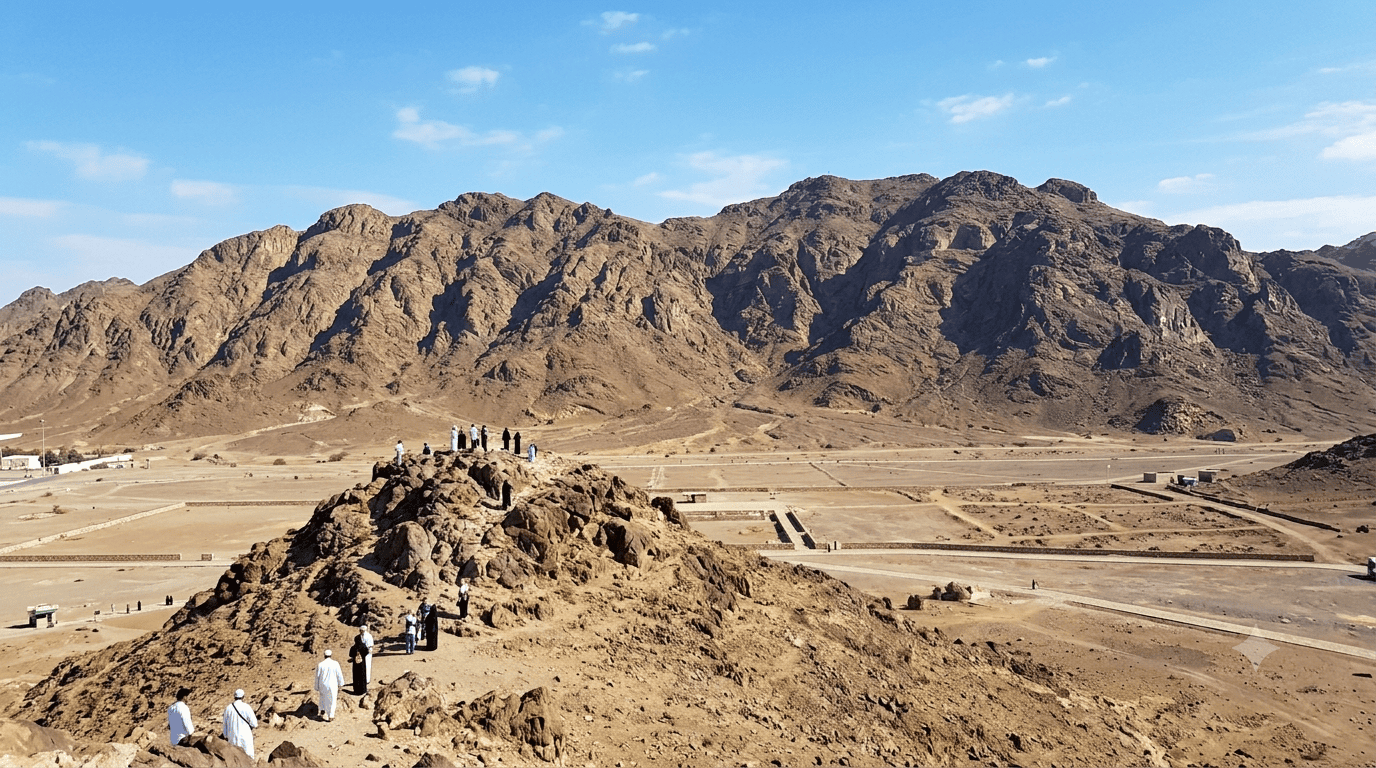
Jabal-e-Uhud is important because the Battle of Uhud took place near its slopes during the third year after Hijrah. The confrontation was fought between the Muslim community of Madinah, led by Prophet Muhammad ﷺ, and the Quraysh army of Makkah.
The battle tested the discipline, courage and unity of the early Muslim community. It also demonstrated how a change in position by a small group could affect the outcome of an entire battle.
Several verses of Surah Aal-e-Imran discuss the events, emotions and lessons connected with Uhud. The Quran recalls how Prophet Muhammad ﷺ left his home early in the morning to position the believers for battle. The events of Uhud were therefore not preserved only through historical reports; they became part of Quranic guidance for future generations.
What Led to the Battle of Uhud?
The Battle of Uhud occurred after the Battle of Badr, where the Muslims had achieved an important victory against the Quraysh.
The leaders of Quraysh wanted to recover their political influence and avenge their losses at Badr. They gathered a large army and travelled towards Madinah, intending to confront the Muslim community.
Historical accounts state that the Quraysh and their allies numbered around 3,000. The Muslim force initially numbered approximately 1,000, but about 300 men withdrew before the battle. This left roughly 700 Muslims to face the much larger Makkan army.
When news of the advancing army reached Madinah, Prophet Muhammad ﷺ consulted his companions. After discussion, the Muslims marched towards the area near Mount Uhud to defend Madinah.
How Did Prophet Muhammad ﷺ Arrange the Muslim Army?
The Prophet ﷺ selected the battlefield carefully. Mount Uhud protected the Muslim army from one direction, reducing the possibility of being surrounded.
However, there was a smaller hill near the battlefield from which enemy cavalry could potentially attack the Muslim army from behind. This hill later became known as Jabal al-Rumah, or Archers’ Hill.
Prophet Muhammad ﷺ appointed 50 archers under the command of Hazrat Abdullah ibn Jubayr رضي الله عنه. He gave them clear instructions to remain at their position regardless of whether the Muslims appeared to be winning or losing. Their responsibility was to protect the rear of the Muslim army and prevent the enemy cavalry from crossing the hill.
What Happened During the Battle of Uhud?
At the beginning of the battle, the Muslim army gained a strong advantage. The Quraysh forces started retreating, and it appeared that the Muslims had achieved another major victory.
Seeing the enemy withdraw, several archers believed that the battle had ended. They left their assigned position and moved towards the battlefield. Hazrat Abdullah ibn Jubayr رضي الله عنه reminded them of the Prophet’s instructions, but most of the archers still descended from the hill.
The opening allowed the Makkan cavalry to move around the hill and attack the Muslims from behind. The battle changed rapidly. The Muslim formation became disrupted, and confusion spread across the battlefield.
The Quran refers to this difficult moment and reminds believers about the consequences of disagreement and disobedience after Allah had shown them what they desired. The events became a lasting lesson in discipline and collective responsibility.
How Was Prophet Muhammad ﷺ Injured at Uhud?
During the confusion, Prophet Muhammad ﷺ became a direct target of the enemy. He suffered injuries to his face and head, and one of his teeth was damaged. His helmet was also broken. Authentic narrations describe how Hazrat Ali رضي الله عنه brought water while Hazrat Fatimah رضي الله عنها cleaned the blood from the Prophet’s face.
Despite his injuries and the intense danger around him, the Prophet ﷺ remained firm. A group of loyal companions gathered around him and defended him with remarkable courage.
The false news that the Prophet ﷺ had been martyred also spread across the battlefield, causing further confusion. When the companions discovered that he was alive, they regrouped around him near the slopes of Mount Uhud.
Who Were the Martyrs of Uhud?
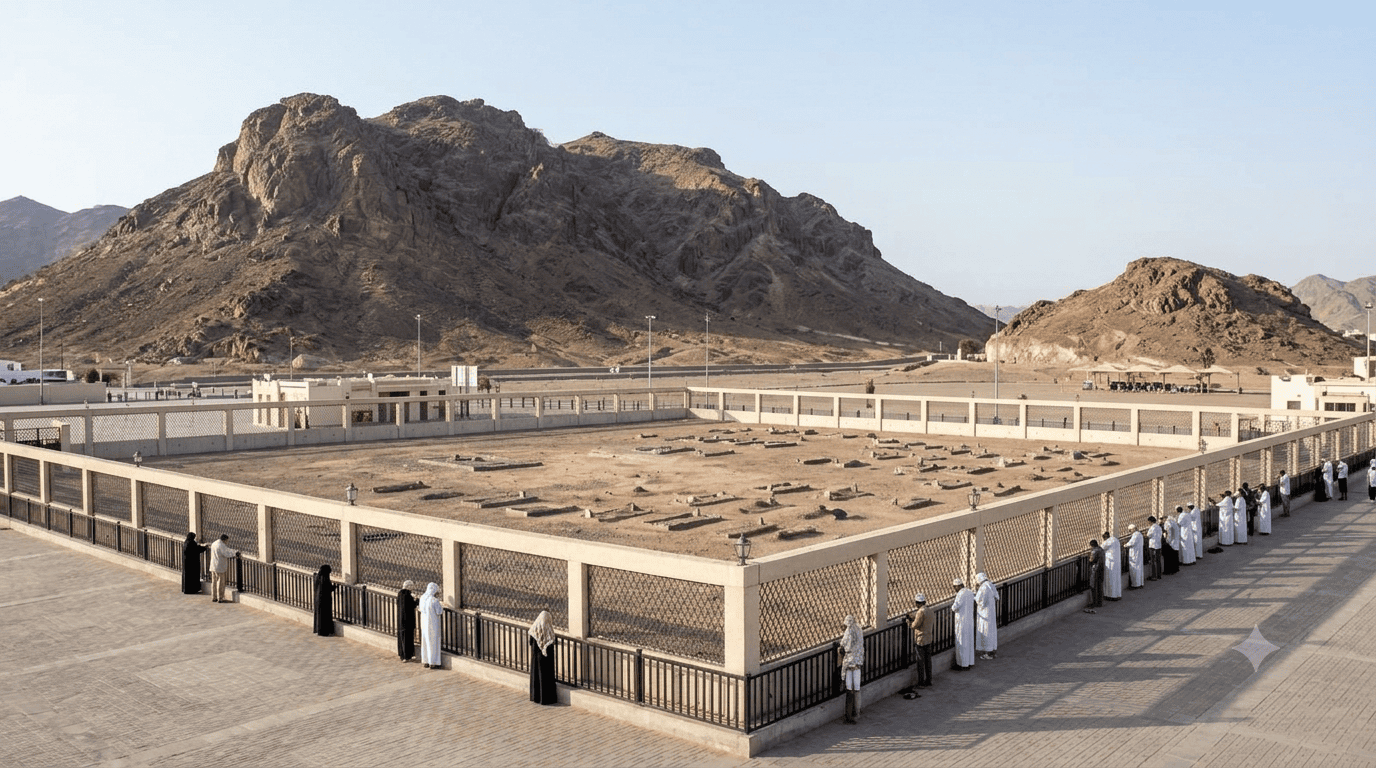
Approximately 70 Muslim companions were martyred during the Battle of Uhud. Among them was Hazrat Hamza ibn Abdul Muttalib رضي الله عنه, the beloved uncle of Prophet Muhammad ﷺ, who was known for his courage, strength and dedication to Islam.
Hazrat Hamza رضي الله عنه had played an important role in defending the Muslim community and supporting the Prophet ﷺ during the early years of Islam. His martyrdom was one of the most painful moments of the Battle of Uhud.
Other companions remained beside the Prophet ﷺ during the most dangerous stage of the battle. Some protected him with their bodies, while others continued defending the Muslim position despite suffering serious injuries.
The martyrs were buried near the battlefield. Today, the Uhud Martyrs’ Cemetery remains one of the most recognised historical ziyarat locations in Madinah.
What Does the Quran Teach About the Battle of Uhud?
The Battle of Uhud is discussed mainly in Surah Aal-e-Imran. The relevant verses address several important themes.
Obedience to Leadership
The archers had received clear instructions from the Prophet ﷺ. Leaving their position showed how ignoring a command, even during an apparent victory, can create serious consequences.
Unity During Difficulty
The battle demonstrates that success requires cooperation, trust and discipline. Individual decisions can affect an entire community.
Worldly Success Is Not Permanent
The Muslims had won at Badr but faced a serious setback at Uhud. This showed that believers should not become overconfident after success.
Allah Tests the Believers
Difficult situations reveal sincerity, courage and patience. The events at Uhud distinguished those who remained firm from those who lost confidence.
Mercy and Forgiveness
Although mistakes were made, the Quran guided the believers towards repentance, forgiveness and renewed commitment rather than permanent despair.
Life and Death Are in Allah’s Control
The temporary rumour about the Prophet’s martyrdom tested the faith of the Muslim community. The Quran reminded believers that their commitment to Allah must remain firm under every condition.
Was the Battle of Uhud a Defeat?
The Battle of Uhud is sometimes described simply as a Muslim defeat, but this does not fully represent its historical and spiritual significance.
The Quraysh did not capture Madinah, destroy the Muslim community or achieve a permanent strategic victory. The Muslims experienced heavy losses and were forced to recover near Mount Uhud, but the community remained intact.
Uhud was therefore a painful military setback that became a powerful source of guidance. It taught the Muslim community that faith must be accompanied by preparation, discipline, patience and obedience. These lessons helped strengthen the believers during later challenges.
Why Should Umrah Pilgrims Visit Jabal-e-Uhud?
Visiting Jabal-e-Uhud is not an obligatory part of Umrah. The essential Umrah rituals are performed in Makkah and include Ihram, Tawaf, Sa’i and Halq or Taqsir. If you would like a step-by-step overview, see our complete guide on how to perform Umrah and the detailed breakdown of the Farz, Wajib and Sunnah acts of Umrah.
Many pilgrims still visit Mount Uhud during their stay in Madinah because it allows them to understand Islamic history in its original setting. Standing near Jabal al-Rumah helps visitors understand why the archers’ position was strategically important. Seeing the slopes of Mount Uhud makes the events described in the Seerah and Quran feel more immediate and real.
A visit can encourage pilgrims to reflect on the sacrifice of the companions, the leadership of Prophet Muhammad ﷺ, the importance of obeying clear instructions, the consequences of internal disagreement, patience during loss and hardship, and remaining committed after making a mistake.
Uniworld Travel & Tours includes guided visits to important historical and religious sites in many of its Umrah packages, allowing pilgrims to understand the background of each location while travelling comfortably.
Important Places to See Near Jabal-e-Uhud
Mount Uhud
The large mountain dominates the northern landscape of Madinah. It is the main geographical landmark associated with the battle.
Jabal al-Rumah
Jabal al-Rumah is the smaller hill where Prophet Muhammad ﷺ positioned the group of archers. It is sometimes called Archers’ Hill because of its role during the Battle of Uhud. From the area around the hill, visitors can better understand how leaving the position exposed the rear of the Muslim army.
Cemetery of the Martyrs of Uhud
The cemetery contains the graves of companions who were martyred during the battle, including Hazrat Hamza رضي الله عنه. Visitors should maintain silence, dignity and respect while passing through the area.
Uhud Martyrs Square
The wider area has been developed to receive visitors and preserve the historical importance of the location. It remains one of the most recognised Islamic historical sites in Madinah.
How to Visit Jabal-e-Uhud Respectfully
Jabal-e-Uhud should be visited as a place of historical learning and reflection. Visitors should wear modest clothing, maintain respectful behaviour, and avoid loud conversations around the cemetery. It also helps to follow the instructions issued by local authorities, keep the area clean, avoid blocking pathways, supervise children carefully, and avoid damaging or removing stones from the site. Above all, focus on the historical lessons of the location.
There is no specific compulsory ritual that must be performed at Mount Uhud. Pilgrims should avoid treating the mountain, soil or stones as objects with independent religious power.
Best Time to Visit Mount Uhud
Early morning and late afternoon are generally comfortable times to visit, because temperatures may be lower than during the middle of the day. A typical visit may take between 45 and 90 minutes, depending on transportation, group size and the time provided for historical explanation.
Pilgrims should carry drinking water, particularly during warmer months, and elderly visitors should avoid unnecessary climbing and remain within the safe visitor areas. Choosing the right season also makes a difference, and our month-by-month guide to the best time to perform Umrah can help you plan your Madinah ziyarat comfortably.
Jabal-e-Uhud and the Spiritual Experience of Madinah
Madinah is filled with places connected to the life of Prophet Muhammad ﷺ and his companions. Masjid an-Nabawi represents worship, peace and closeness to the Prophet ﷺ. Masjid Quba recalls the beginning of the Muslim community in Madinah. Masjid al-Qiblatain represents an important change in the direction of prayer.
Jabal-e-Uhud represents sacrifice, testing and recovery. It reminds Muslims that strong faith does not mean a life without hardship; it means remaining committed to Allah during moments of success as well as loss. This is why visiting Mount Uhud can become one of the most memorable parts of a Madinah ziyarat.
Lessons From the Battle of Uhud for Muslims Today
The events of Uhud remain relevant because their lessons apply far beyond the battlefield.
Follow Instructions Completely
The archers were not told to remain only until victory appeared. They were instructed to remain until the Prophet ﷺ gave them permission to leave. Partial obedience can produce consequences similar to complete disobedience.
Never Become Overconfident
Success at the beginning of the battle caused some people to believe that the danger had passed. Uhud teaches believers to remain alert, humble and responsible even when success appears certain.
Protect Unity
Disagreement and individual decisions weakened the collective position. Families, organisations and communities also succeed when members respect their responsibilities and work towards a shared purpose.
Recover After Setbacks
The Muslims suffered deeply at Uhud, but they did not abandon their mission. A setback should become an opportunity to learn, correct mistakes and return with stronger faith.
Honour Sacrifice Through Character
Remembering the martyrs of Uhud should inspire honesty, patience, courage and service to others. Their sacrifice should not be remembered only as a historical event; it should influence how Muslims live and respond to challenges.
Plan Your Madinah Ziyarat With Uniworld Travel & Tours
A meaningful Umrah journey includes worship, reflection and an understanding of the places that shaped Islamic history. Uniworld Travel & Tours offers Umrah packages from Pakistan with visa assistance, flights, hotel accommodation, ground transportation and guided ziyarat in Makkah and Madinah. To help you budget, our complete breakdown of Umrah cost from Pakistan in 2026 covers visas, flights, hotels and hidden costs.
Our guided Madinah visits may include important locations such as Jabal-e-Uhud, Jabal al-Rumah, Masjid Quba, Masjid al-Qiblatain, the Seven Mosques, and sites connected with the Battle of the Trench.
Explore our Umrah packages and travel with a team committed to making your sacred journey organised, comfortable and spiritually meaningful. Have a question about your trip? Contact our team and we will help you plan every detail.
Frequently Asked Questions
Where is Jabal-e-Uhud located?
Jabal-e-Uhud is located north of Madinah in Saudi Arabia, approximately four kilometres from Masjid an-Nabawi.
What happened at Jabal-e-Uhud?
The Battle of Uhud took place near the mountain in 3 AH, corresponding to 625 CE. It was fought between the Muslims of Madinah and the Quraysh army of Makkah.
How many companions were martyred at Uhud?
Approximately 70 Muslim companions were martyred during the Battle of Uhud.
Is Hazrat Hamza رضي الله عنه buried at Uhud?
Yes. Hazrat Hamza ibn Abdul Muttalib رضي الله عنه was martyred during the battle and buried near the battlefield with other martyrs of Uhud.
What is Jabal al-Rumah?
Jabal al-Rumah, also called Archers’ Hill, is the small hill where Prophet Muhammad ﷺ positioned 50 archers to protect the Muslim army during the Battle of Uhud.
Is visiting Jabal-e-Uhud compulsory during Umrah?
No. Visiting Jabal-e-Uhud is not a compulsory ritual of Umrah. It is a historical ziyarat that pilgrims may visit during their stay in Madinah.
What did Prophet Muhammad ﷺ say about Mount Uhud?
The Prophet ﷺ said that Uhud is a mountain that loves the Muslims and is loved by them. The narration appears in authentic collections including Sahih al-Bukhari and Sahih Muslim.
How long does a Jabal-e-Uhud visit take?
Most organised visits take approximately 45 to 90 minutes, depending on the group, traffic and time spent learning about the battlefield.
Can elderly pilgrims visit Mount Uhud?
Yes. Elderly pilgrims can visit the main historical area without climbing the mountain. Comfortable transportation, drinking water and avoiding midday heat are recommended.
What is the main lesson of the Battle of Uhud?
The main lessons include obedience, discipline, unity, patience, humility and the importance of recovering faithfully after a setback.