Quick Answer: Ramadan Umrah vs Regular Umrah
Ramadan Umrah offers exceptional spiritual reward and a deeply emotional atmosphere, but it usually comes with higher costs, larger crowds, limited hotel availability, and more physical pressure. Regular Umrah is generally calmer, more affordable, easier to plan, and better suited for first-time pilgrims, elderly travelers, families, and anyone who wants a more relaxed worship experience.
Key Takeaways
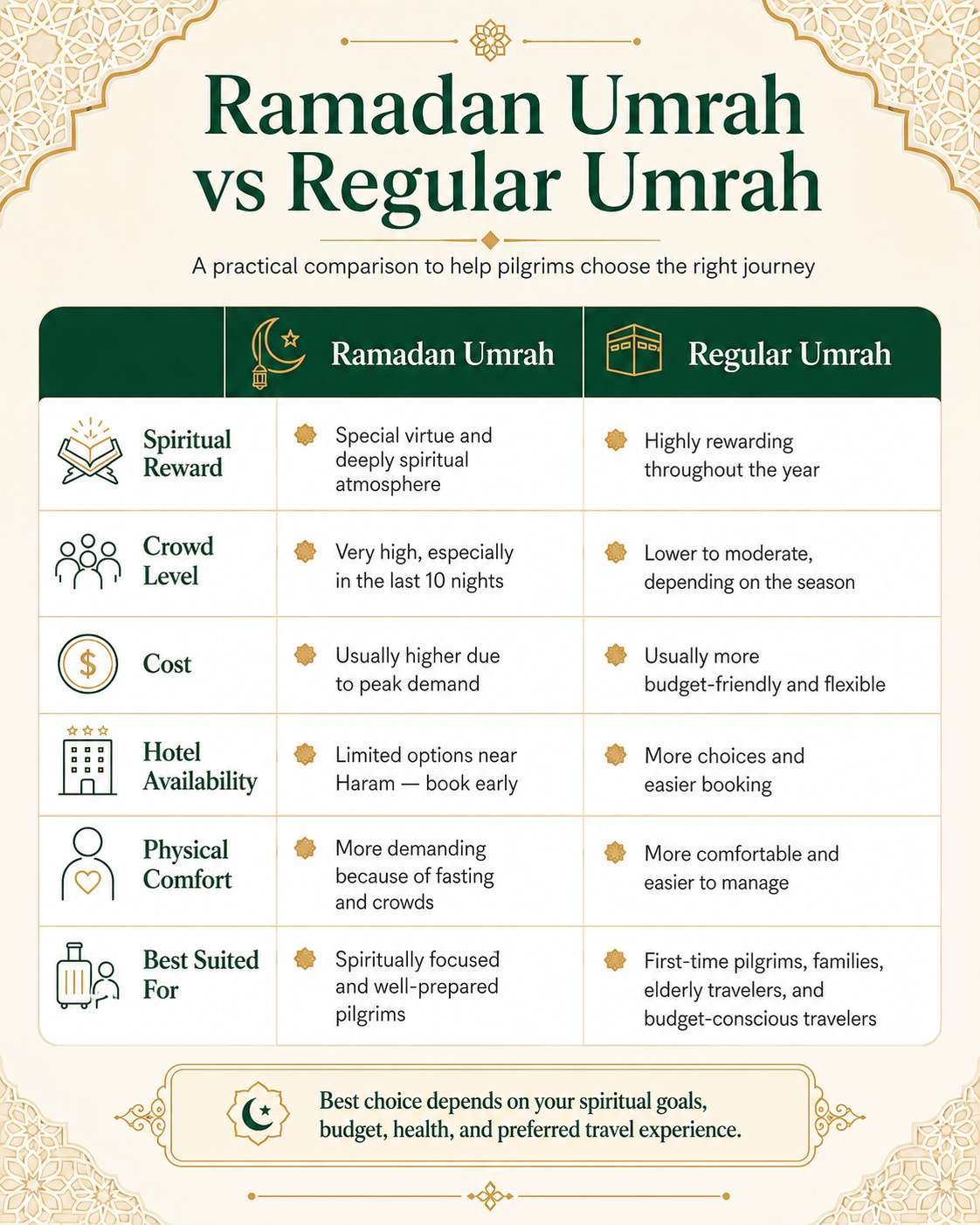
| Factor | Ramadan Umrah | Regular Umrah |
|---|---|---|
| Spiritual reward | Exceptionally high; linked with the reward of Hajj in authentic hadith | Highly rewarding throughout the year |
| Crowd level | Very high, especially last 10 nights | Low to moderate depending on month |
| Cost | Usually higher due to demand | Usually more flexible and budget-friendly |
| Hotels | Limited availability near Haram | Easier to find better options |
| Physical comfort | More demanding because of fasting, crowds, and long worship hours | More manageable for most pilgrims |
| Best for | Spiritually focused, physically prepared pilgrims | First-time pilgrims, families, elderly travelers, budget-conscious travelers |
| Booking time | Earlier planning strongly recommended | More flexible planning possible |
Introduction
For many Muslims, Umrah is not just a journey. It is a return to Allah, a chance to stand before the Kaaba, make sincere dua, seek forgiveness, and reset the heart. But one question often creates confusion for pilgrims planning from Pakistan: Should I perform Umrah in Ramadan or choose a regular month?
The answer depends on your spiritual goals, budget, health, travel style, family needs, and tolerance for crowds. Ramadan Umrah carries a unique emotional and religious significance, while regular Umrah offers more comfort, better planning flexibility, and a calmer environment.
This guide compares Ramadan Umrah vs Regular Umrah in a balanced way so you can choose the option that genuinely suits your journey.
What Is the Main Difference Between Ramadan Umrah and Regular Umrah?
The main difference is the overall experience. Ramadan Umrah is spiritually intense, crowded, expensive, and deeply emotional. Regular Umrah is usually calmer, more affordable, and easier to manage physically.
Umrah itself can be performed during most times of the year, outside the Hajj period. According to the official Nusuk Umrah journey guide, Umrah is a sacred journey of devotion, purification, and spiritual renewal that brings Muslims together in the holy precincts of Makkah. Official Nusuk Umrah Journey
Regular Umrah allows pilgrims to focus on the rituals with less pressure. Ramadan Umrah adds the blessing of fasting, Taraweeh, Qiyam, Quran recitation, and the unmatched feeling of worshipping in Makkah during the most sacred month of the Islamic year.
Is Ramadan Umrah More Rewarding Than Regular Umrah?
Yes, Ramadan Umrah has a special virtue mentioned in authentic hadith. In Sahih al-Bukhari, the Prophet Muhammad ﷺ said to perform Umrah when Ramadan comes, because Umrah in Ramadan is equal to Hajj in reward. Sahih al-Bukhari 1782
This does not mean Ramadan Umrah replaces the obligation of Hajj for someone who is required to perform Hajj. Rather, it highlights the immense reward and spiritual value of performing Umrah during Ramadan.
Regular Umrah is still highly rewarding. The Qur’an mentions completing Hajj and Umrah for Allah in Surah Al-Baqarah 2:196, reminding believers that the purpose of the journey is sincerity, obedience, and worship. A regular Umrah performed with humility, patience, and sincere intention can transform a person’s life.
Spiritual Experience Comparison
| Spiritual Area | Ramadan Umrah | Regular Umrah |
|---|---|---|
| Worship environment | Very intense and emotionally powerful | Peaceful and focused |
| Fasting | Part of the daily experience | Not required unless chosen voluntarily |
| Taraweeh/Qiyam | Major highlight | Not part of most regular months |
| Quran recitation | Strong Ramadan atmosphere | Flexible personal schedule |
| Dua opportunities | Very emotional, especially near iftar and night prayers | More private and less rushed |
| Best spiritual benefit | Maximum intensity and reward | Calm reflection and consistency |
How Are Crowds Different in Ramadan Umrah vs Regular Umrah?
Crowds are one of the biggest differences. Ramadan, especially the last ten nights, attracts pilgrims from around the world. Masjid al-Haram, Mataf, Sa’i area, hotels, restaurants, lifts, buses, and nearby streets can become extremely busy.
For some pilgrims, this atmosphere is beautiful. They feel the power of the Ummah gathered in worship. For others, it becomes physically and emotionally tiring.
Regular Umrah usually offers a calmer experience. Pilgrims may find it easier to perform Tawaf, complete Sa’i, pray in the mosque, move between hotel and Haram, and spend more focused time in dua.
If you are traveling for the first time, you may want to read UNIworld’s step-by-step Umrah guide before choosing your travel month. Understanding the basic flow of Ihram, Tawaf, Sa’i, and completion helps reduce stress in both Ramadan and regular seasons.
Cost Difference: Is Ramadan Umrah More Expensive?
In most cases, yes. Ramadan Umrah is usually more expensive because demand increases sharply. Flights, hotels near Haram, transport, room sharing, and package availability can all be affected by seasonal demand.
Regular Umrah is often more budget-friendly because travel dates are more flexible. Pilgrims can compare hotel categories, choose different durations, avoid peak periods, and plan according to budget.
For Pakistani pilgrims, the total cost depends on flight route, hotel distance, room sharing, visa processing, transport, meals, and season. UNIworld’s detailed Umrah cost from Pakistan guide is a useful supporting resource for understanding what usually affects the final price.
Cost Comparison Table
| Cost Factor | Ramadan Umrah | Regular Umrah |
|---|---|---|
| Airfare | Usually higher | More flexible |
| Hotel near Haram | Higher demand and higher rates | Better availability |
| Room sharing | May be more expensive | More options available |
| Transport | Can be busier due to demand | Easier to manage |
| Food/meal planning | Iftar and suhoor arrangements matter | Normal meal schedule |
| Best booking approach | Book early | Compare dates and packages |
Accommodation: Which Option Gives Better Hotel Choices?
Regular Umrah usually gives better hotel flexibility. You can choose hotels closer to Haram, compare walking distance, select room type, and balance comfort with budget.
During Ramadan, hotels near Masjid al-Haram and Masjid an-Nabawi become highly demanded. Prices rise, availability drops, and late bookings may force pilgrims to stay farther away. This matters because walking long distances while fasting or after Taraweeh can be difficult, especially for elderly pilgrims, children, and people with health concerns.
Before finalizing travel dates, check the hotel distance carefully. A hotel that seems affordable may become tiring if it requires long walks, shuttle waits, or crowded transport. UNIworld’s guide on the best time to book hotels in Makkah can help you understand why early planning matters, especially around peak seasons.
Visa and Travel Planning Considerations
Visa and documentation planning is important for both Ramadan and regular Umrah. The difference is urgency. In Ramadan, demand is higher, so any delay in passport readiness, visa processing, flight confirmation, or hotel booking can create stress.
For regular Umrah, travelers often have more date flexibility. They can wait for better flight options, choose a quieter month, or plan around work and family schedules.
Before booking, pilgrims should prepare:
- Valid passport with sufficient validity
- Required travel documents
- Confirmed travel dates
- Hotel and transport details
- Health and medication planning
- Basic understanding of Umrah rituals
- Emergency contact information
- Budget for meals, shopping, and local expenses
If you are comparing dates, UNIworld’s best time to perform Umrah guide is a helpful internal resource because it explains how different months can change the overall experience.
Weather and Physical Comfort
Weather matters more than many pilgrims expect. Makkah and Madinah can be physically demanding because pilgrims walk a lot, stand for prayers, move through crowds, and often sleep less than usual.
Ramadan Umrah can be more tiring because fasting changes your energy levels. If Ramadan falls during warmer months, the physical challenge increases. Even when the weather is mild, the combination of fasting, long prayers, heavy crowds, and limited rest can affect stamina.
Regular Umrah allows more control over your routine. You can eat and drink normally, rest between rituals, choose quieter prayer times, and move at a more comfortable pace.
Physical Comfort Comparison
| Traveler Type | Ramadan Umrah | Regular Umrah |
|---|---|---|
| First-time pilgrim | Spiritually powerful but may feel overwhelming | Easier and more manageable |
| Elderly traveler | Can be difficult due to crowds and fasting | Usually more suitable |
| Families with children | Challenging during peak hours | More comfortable |
| Budget traveler | Higher pressure on cost | Better value options |
| Young and healthy traveler | Rewarding if well prepared | Comfortable and flexible |
| Pilgrim seeking solitude | Harder due to crowds | Better chance of quiet worship |
Travel Experience: What Does Each Journey Feel Like?
Ramadan Umrah feels alive, emotional, and unforgettable. The atmosphere of iftar in the holy cities, Taraweeh prayers, late-night worship, Quran recitation, and the unity of Muslims from around the world creates a feeling that many pilgrims remember forever.
However, it is not always easy. Restaurants can be crowded, elevators can take longer, roads can be busy, and simple movements may require patience.
Regular Umrah feels slower and more personal. You may have more time to sit in the mosque, make dua, perform additional Tawaf, visit religious sites, and reflect without feeling rushed. For pilgrims who want emotional focus without heavy crowd pressure, regular Umrah can be deeply meaningful.
To prepare spiritually before either journey, you can also review these duas for Umrah so your worship feels more focused and heartfelt.
Who Should Choose Ramadan Umrah?
Ramadan Umrah is best for pilgrims who are spiritually motivated, physically prepared, and comfortable with large crowds. It is ideal for people who want to experience the blessings of Ramadan in Makkah and Madinah and are willing to manage higher costs and greater physical effort.
Choose Ramadan Umrah if:
- You specifically want the reward and atmosphere of Ramadan.
- You can handle fasting while traveling.
- You are comfortable with crowds.
- You can book early.
- Your budget allows peak-season pricing.
- You are physically able to walk and stand for longer periods.
- You want to experience Taraweeh and night worship in the holy cities.
Ramadan Umrah is not only a trip; it is an intense spiritual commitment. Go with patience, preparation, and realistic expectations.
Who Should Choose Regular Umrah?
Regular Umrah is best for first-time pilgrims, families, elderly travelers, people with health concerns, and anyone who wants a calmer and more affordable journey.
Choose regular Umrah if:
- This is your first Umrah.
- You want lower crowd pressure.
- You are traveling with parents or children.
- You need better hotel flexibility.
- You want to manage your budget carefully.
- You prefer a slower worship routine.
- You want more time to learn and perform each step calmly.
Regular Umrah is not “less meaningful.” It can be more focused, more peaceful, and more practical for many pilgrims.
Ramadan Umrah vs Regular Umrah: Final Comparison Table
| Category | Ramadan Umrah | Regular Umrah |
|---|---|---|
| Main strength | Exceptional spiritual atmosphere | Comfort, flexibility, and calmness |
| Main challenge | Crowds and higher cost | Less Ramadan-specific atmosphere |
| Best booking time | As early as possible | Flexible, but early is still better |
| Hotel availability | Limited near Haram | More options |
| Worship pace | Intense | Balanced |
| Ideal for | Spiritually focused, physically strong pilgrims | First-timers, families, elderly, budget travelers |
| Cost level | High | Low to moderate |
| Crowd pressure | Very high | Lower |
| Overall recommendation | Best for reward and Ramadan experience | Best for ease and comfort |
Decision Framework: Which Umrah Should You Choose?
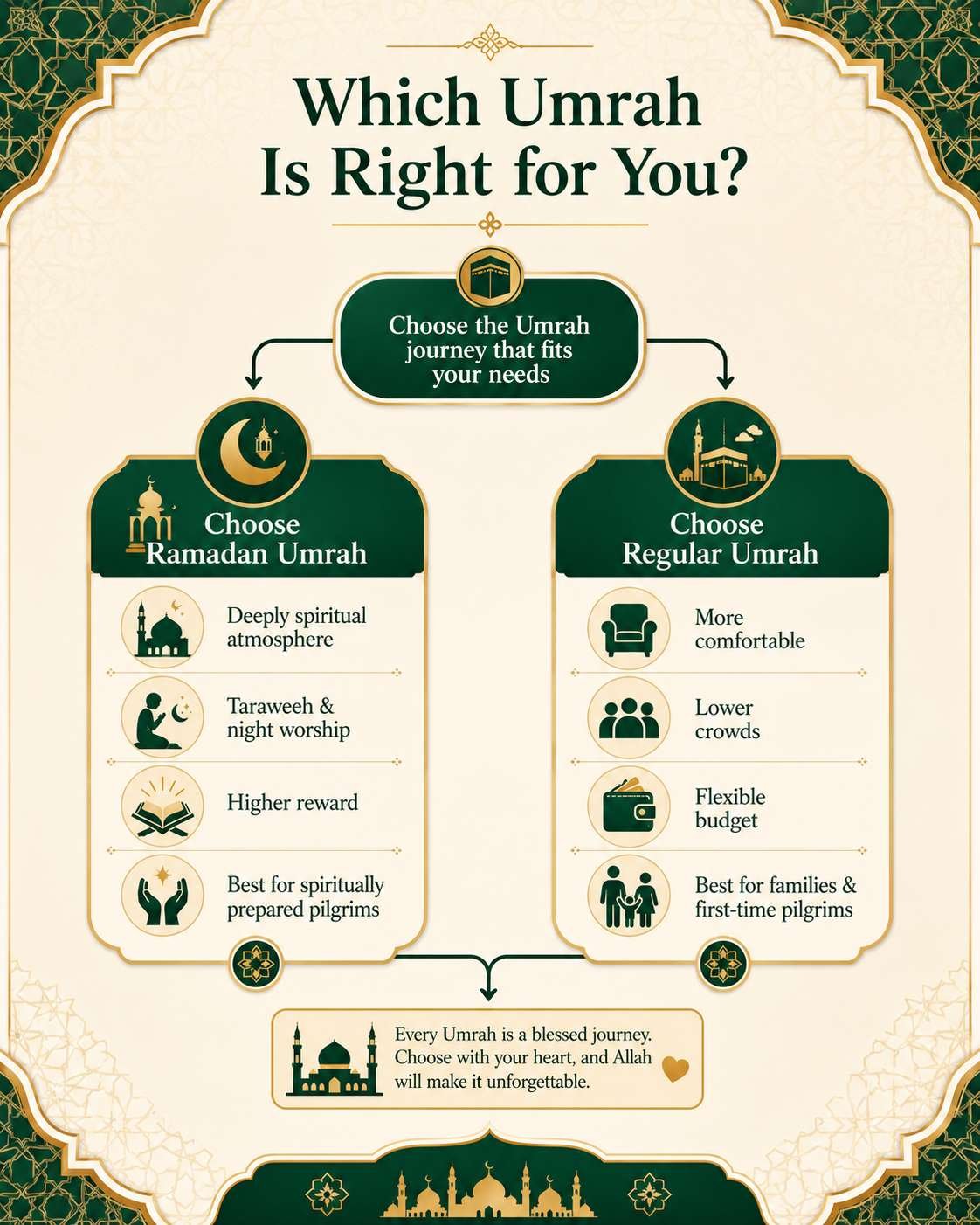
Ask yourself these questions before booking:
Choose Ramadan Umrah if your answer is “yes” to most of these:
- Am I physically fit enough for fasting, walking, and crowds?
- Can I manage a higher budget?
- Am I emotionally ready for a busy environment?
- Is experiencing Ramadan in Makkah/Madinah my main goal?
- Can I book early enough to secure better hotels and flights?
Choose Regular Umrah if your answer is “yes” to most of these:
- Is this my first Umrah?
- Am I traveling with elderly parents or children?
- Do I want better hotel value?
- Do I prefer a peaceful worship schedule?
- Do I want to avoid peak-season pressure?
- Do I need more flexibility with budget and dates?
Common Mistakes Pilgrims Make When Comparing Ramadan and Regular Umrah
| Mistake | Better Approach |
|---|---|
| Choosing Ramadan only because others say it is best | Choose based on health, budget, and spiritual readiness |
| Booking late for Ramadan | Plan early because demand rises quickly |
| Ignoring hotel distance | Check walking distance and shuttle options |
| Underestimating crowds | Prepare mentally and physically |
| Thinking regular Umrah is less valuable | Focus on sincerity, humility, and acceptance |
| Not learning the rituals before travel | Study the basic Umrah steps in advance |
For practical preparation, also review UNIworld’s guide on Ihram mistakes and Umrah penalties so you can avoid common errors during the journey.
Soft Planning Note for Pakistani Pilgrims
If you are planning from Karachi or anywhere in Pakistan, the best option depends on your travel dates, budget, hotel preference, and family situation. UNIworld offers Umrah packages from Pakistan with support for flights, visa assistance, accommodation, transport, and guided travel arrangements.
You do not need to rush your decision. First decide what matters most: spiritual intensity, comfort, budget, hotel distance, family ease, or travel flexibility. Once your priority is clear, choosing between Ramadan Umrah and regular Umrah becomes much easier.
FAQs About Ramadan Umrah vs Regular Umrah
1. Is Ramadan Umrah better than regular Umrah?
Ramadan Umrah has a special reward mentioned in authentic hadith, making it spiritually exceptional. However, regular Umrah can still be deeply rewarding and may be better for pilgrims who need comfort, lower costs, and fewer crowds.
2. Does Ramadan Umrah count as Hajj?
No. The hadith highlights the reward of Umrah in Ramadan, but it does not replace the obligation of Hajj for someone who is required and able to perform Hajj.
3. Is Ramadan Umrah more expensive?
Usually, yes. Ramadan is a peak season, so flights, hotels, and package rates often rise due to high demand. Booking early can help secure better options.
4. Is regular Umrah good for first-time pilgrims?
Yes. Regular Umrah is often better for first-time pilgrims because it is calmer, easier to manage, and allows more time to learn and perform the rituals without heavy crowd pressure.
5. Which month is best for regular Umrah?
The best month depends on your priorities. Cooler and less crowded months are usually more comfortable, while off-peak periods may offer better value. Avoid choosing only by price; hotel distance, weather, and crowd levels also matter.
6. Can elderly pilgrims perform Ramadan Umrah?
Yes, but they should consider health, fasting ability, walking distance, crowd pressure, and hotel location. For many elderly pilgrims, regular Umrah may be more comfortable.
7. Should families choose Ramadan Umrah or regular Umrah?
Families with children often find regular Umrah easier because routines, meals, rest, and movement are more manageable. Ramadan Umrah can still be beautiful if the family is prepared and books suitable accommodation.
8. How early should I book Ramadan Umrah?
As early as possible. Ramadan demand is much higher than regular months, especially for hotels near Haram and convenient flight schedules. Early planning gives better control over budget and comfort.
Final Expert Verdict
Ramadan Umrah is best for pilgrims who want the highest spiritual atmosphere, are physically prepared, and can manage peak-season costs and crowds. Regular Umrah is best for those who want a calmer, more affordable, and more comfortable journey.
Neither option is wrong. The better choice is the one that helps you worship with sincerity, patience, and peace. If your heart is ready for the intensity of Ramadan, it can be unforgettable. If you want ease, focus, and flexibility, regular Umrah may be the wiser choice.
The real success of Umrah is not only when you go. It is how sincerely you go, how patiently you perform it, and how deeply the journey brings you closer to Allah.