
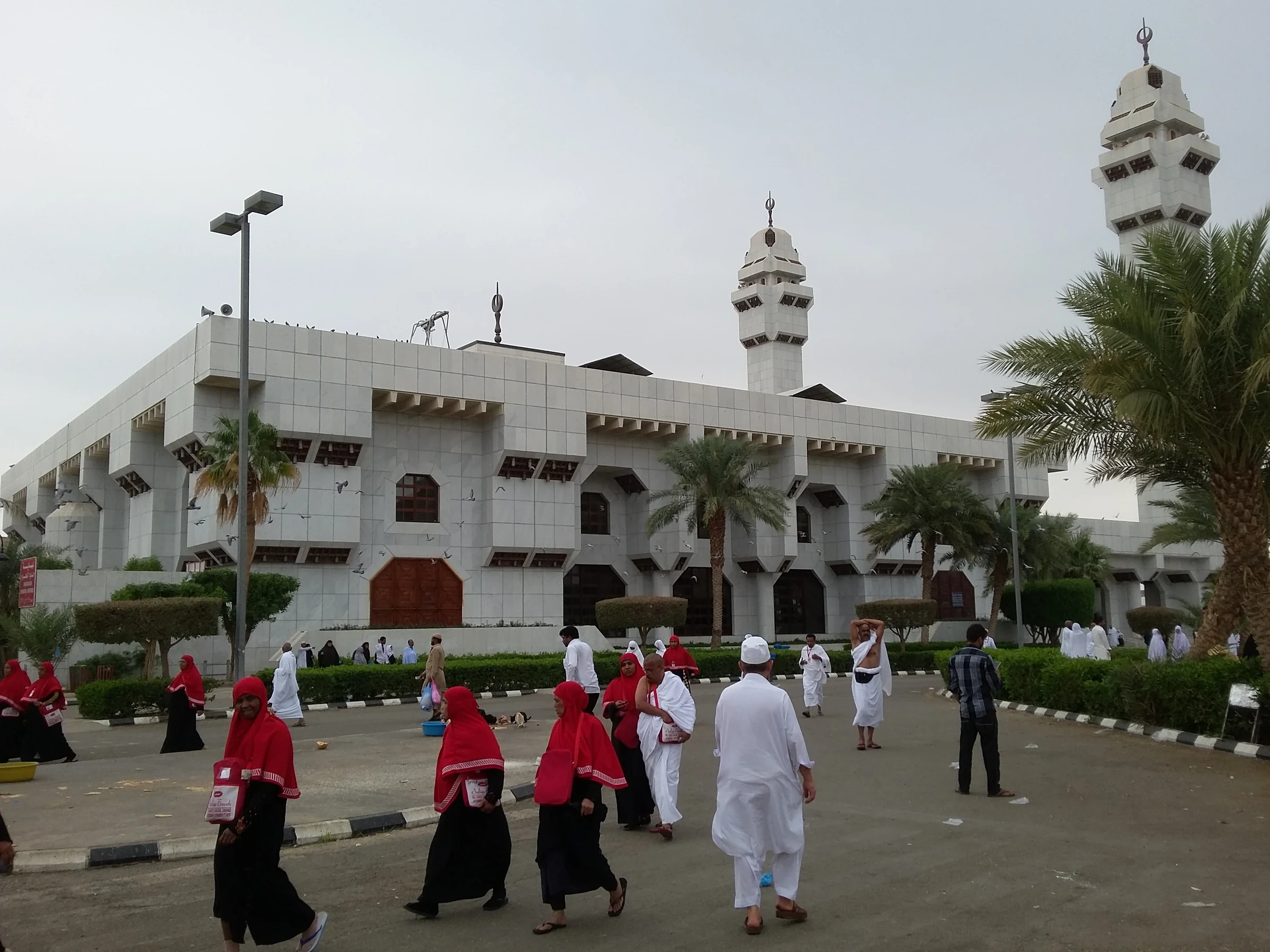
Masjid Aisha, also called Masjid Taneem or Masjid-e-Aisha, is the mosque about 7.5 km north of Masjid al-Haram where pilgrims staying in Makkah go to enter Ihram for another Umrah. It stands just outside the sacred boundary of Makkah, at the spot where Hazrat Aisha (RA) began her Umrah during the Farewell Hajj.
If you are travelling from Pakistan with the intention of performing Umrah, Masjid Aisha does not replace your arrival miqat. On a flight to Jeddah, you must enter Ihram before crossing the relevant miqat boundary in the air. If you visit Madinah first, enter Ihram at Dhul Hulaifah (Abyar Ali) before travelling onwards to Makkah for Umrah.
This guide explains who should use Masjid Aisha, who should not, how to get there from the Haram by bus or taxi, and what to do once you arrive.
Quick answer
- What it is: the closest point outside the Haram boundary where people already in Makkah enter Ihram for Umrah.
- Where: At-Tan'eem district, on the Makkah–Madinah road, about 7.5 km north of Masjid al-Haram, as described by Discover Makkah.
- Who uses it: pilgrims who have finished their first Umrah and want another, Makkah residents, and Hajj pilgrims doing Umrah after Hajj.
- Who should not use it as a substitute: pilgrims arriving from outside the miqat with an existing intention to perform Umrah. They must enter Ihram at or before their arrival miqat.
- How to get there: Makkah Bus Route 2 from Terminal 1 (Jabal al-Ka'bah) to the Ayesha Mosque stop for SAR 4, or a taxi or ride app in about 15–25 minutes.
Masjid Aisha at a glance
| Detail | Information |
|---|---|
| Other names | Masjid Taneem, Masjid-e-Aisha, Masjid Ayesha, Aisha Mosque, Masjid al-Umrah |
| Location | At-Tan'eem, Makkah, on the Makkah–Madinah road |
| Distance from Masjid al-Haram | About 7.5 km north |
| Status | In the Hil (outside the Haram), at the Haram boundary |
| Area | Mosque building about 6,000 m²; total site about 84,000 m² |
| First built | 240 AH, under the Abbasid Caliph al-Mutawakkil; later expanded by the Saudi government |
| Opening hours | Open 24 hours |
| Facilities | Wudu and bathing areas, space to change into Ihram, two minarets |
Why it is called Masjid Aisha: the story behind the site
The mosque takes its name from an event during the Prophet's ﷺ Farewell Hajj in 10 AH. Hazrat Aisha (RA) had entered Ihram for Umrah, but her menstrual cycle began before she could perform Tawaf. The Prophet ﷺ told her to carry on with the rites of Hajj, except Tawaf, until she was pure.
After Hajj, she asked whether she could still perform her own Umrah. The Prophet ﷺ sent her brother, Abdur Rahman bin Abi Bakr (RA), to take her out to At-Tan'eem. She entered Ihram there and performed Umrah in Dhul Hijjah. This account is recorded in Sahih al-Bukhari 1785.
Two lessons from this story still apply to pilgrims today:
- A woman who is menstruating can enter Ihram. She simply waits until she is pure before performing Tawaf.
- Someone who is inside the Haram and wants to start an Umrah goes out to the Hil to enter Ihram, as Aisha (RA) did.
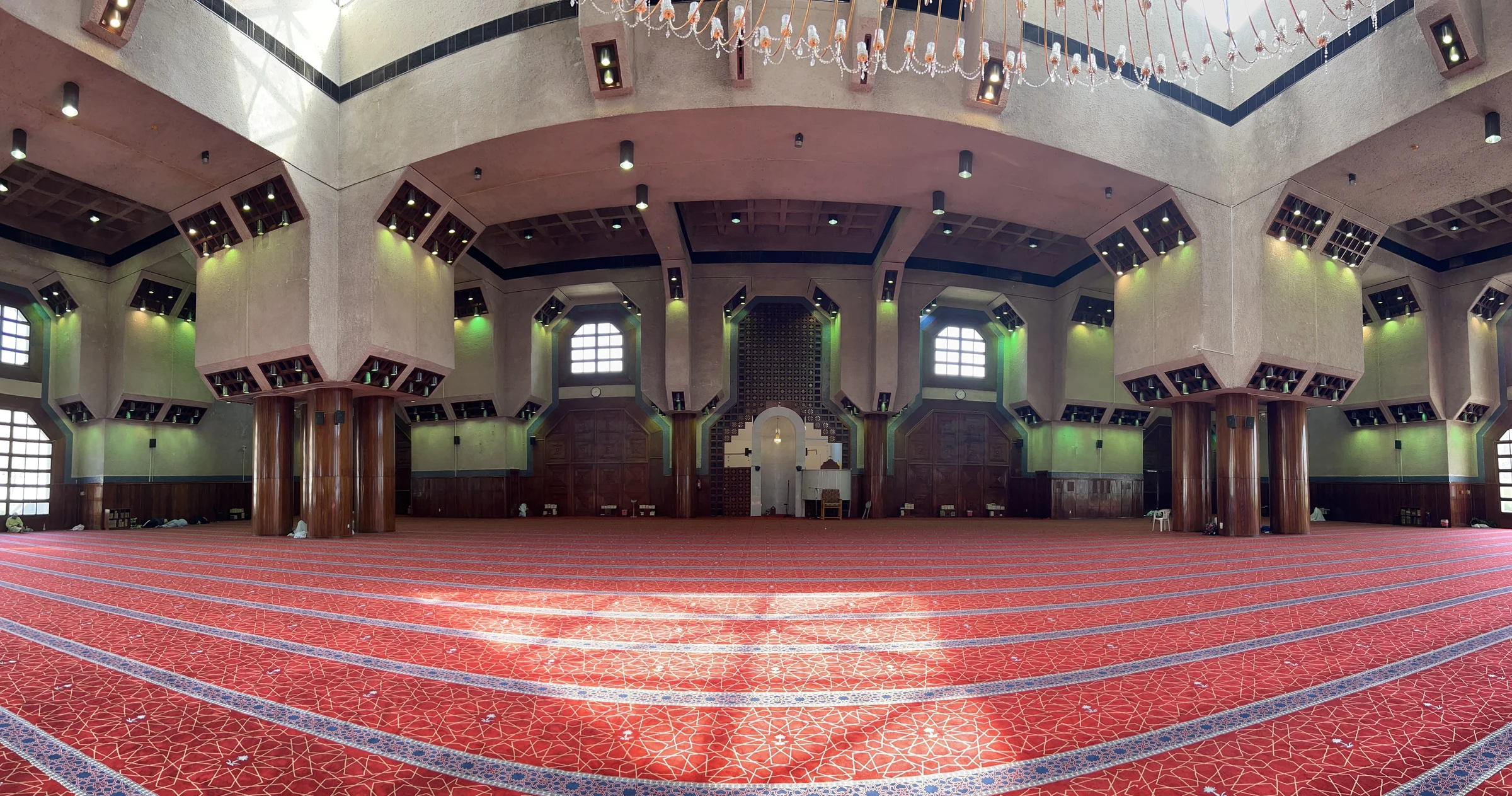
The present mosque has two prominent minarets and a spacious prayer hall. Discover Makkah describes a mosque building of around 6,000 square metres within a wider site of approximately 84,000 square metres.
Is Masjid Aisha a miqat? Haram, Hil and the miqat explained
To understand Masjid Aisha, it helps to separate three areas:
- The Haram: the sacred area around Makkah, marked by boundary points. Masjid al-Haram and most hotels sit inside it.
- The Hil: the land between the Haram boundary and the outer miqat points. Masjid Aisha is in the Hil, right at the boundary.
- The outer miqat points: the five stations the Prophet ﷺ set for pilgrims arriving from outside, including Dhul Hulaifah for those coming from Madinah, Yalamlam and Qarn al-Manazil. They are listed in Sahih al-Bukhari 1524.
The same hadith says that people living within these boundaries enter Ihram from where they are. For Umrah specifically, the majority of scholars hold that someone already in Makkah must leave the Haram for the Hil, based on the story of Aisha (RA). That is why Masjid Aisha is often described as "the miqat for people in Makkah".
So yes, Masjid Aisha works as a place to enter Ihram. But it is not one of the five outer miqat points, and it does not replace them for pilgrims coming from outside.
Does Masjid Aisha apply to you?
| Your situation | Where to enter Ihram | Can you use Masjid Aisha? |
|---|---|---|
| Flying from Pakistan to Jeddah for your first Umrah | Before the plane crosses the miqat boundary | No |
| Flying from Pakistan to Madinah first, then travelling to Makkah for Umrah | At Dhul Hulaifah (Abyar Ali) on the way out of Madinah | No |
| You have finished your first Umrah, are staying in Makkah and want another | Anywhere in the Hil; Masjid Aisha is the closest | Yes |
| You live in Makkah | Anywhere in the Hil | Yes |
| You performed Hajj and want an Umrah afterwards | Anywhere in the Hil | Yes |
| You landed in Jeddah without Ihram and went straight to Makkah | Seek a scholar’s advice about returning to the miqat and any damm due | Not as a fix: see below |
Ihram from Pakistan: why your first Umrah starts in the air
Jeddah lies within the outer miqat boundaries. A pilgrim flying directly from Pakistan to Jeddah with the intention of Umrah must therefore enter Ihram before the aircraft crosses the relevant miqat. Prepare before boarding and follow the airline or group guide’s announcement; do not depend on a fixed announcement time.
Many Pakistani pilgrims put on their Ihram garments at home or at the airport, because changing during the flight can be difficult. Wearing the garments early is fine. Clothing alone does not put you into the sacred state: make the intention for Umrah and recite the talbiyah before crossing the miqat. From then, observe the restrictions of Ihram.
If you cross the miqat intending Umrah without entering Ihram, going to Masjid Aisha later does not by itself remove the consequences. Darul Ifta Birmingham explains this specific situation and the possible requirement for damm. The effect of returning to the miqat depends on what you have already done, so seek advice from a qualified scholar before completing the rites. Our guide to Ihram mistakes, fidyah and damm explains the questions to raise.
Performing another Umrah from Masjid Aisha: what scholars say
Many pilgrims on longer stays want to perform a second or third Umrah. This is where Masjid Aisha is used most, and where scholars have different views.
The Hanafi view (followed by most Pakistani Muslims): a pilgrim may perform as many Umrahs as they wish during one trip, leaving the Haram each time to enter Ihram. Classical Hanafi texts such as Durr al-Mukhtar name At-Tan'eem as the best place to do so, as noted by SeekersGuidance. Scholars holding this view also cite the hadith that one Umrah is an expiation for the sins between it and the next.
The view against repeated Umrahs during one stay: other scholars discourage or do not permit repeatedly leaving Makkah for Tan’eem to start another Umrah during the same journey. They point to the practice of the Prophet ﷺ and his Companions and advise additional Tawaf instead. IslamQA discusses this scholarly view.
Both views are held by respected scholars. If you follow the Hanafi school, performing another Umrah from Masjid Aisha is permitted. Whichever view you follow, avoid tiring yourself or elderly family members to the point that you miss prayers in the Haram.
Each additional Umrah must be completed properly, including the required shaving or trimming. If very little hair remains after a previous Umrah, ask your scholar how to complete this step correctly; do not assume a token snip is sufficient.
How to reach Masjid Aisha from Masjid al-Haram
The mosque is about 7.5 km from the Haram along the road towards Madinah. You have three practical options.
| Option | Where to board | Time | Cost | Best for |
|---|---|---|---|---|
| Makkah Bus (Route 2) | Terminal 1, Jabal al-Ka'bah, near the Haram | 20–35 minutes | SAR 4 per single trip | Solo travellers and couples on a budget |
| Taxi | Taxi ranks near the Haram gates and hotels | About 15–25 minutes without heavy traffic | Variable; agree the return fare and any waiting charge before travel | Families and elderly pilgrims |
| Ride app (Careem, Uber) | Your hotel or a pickup point outside the crowd zone | About 15–25 minutes | Fare shown before booking | Families who want an upfront fare estimate |
By Makkah Bus. The Royal Commission for Makkah City’s published Route 2 timetable lists Terminal 1 (Jabal al-Ka’bah) and the Ayesha Mosque stop on the route towards An Nawwariyyah. The timetable shows about 24 minutes between the terminal and the mosque on many journeys, excluding your walk and waiting time. The operator’s fare table lists SAR 4 for a single regular-route ticket, available digitally through its website or app, or as a paper ticket at designated machines and sales points. Check the Makkah Bus app for current stops, service times and fares before setting out; diversions may apply.
By taxi or ride app. This is the easiest choice for families, wheelchair users and older parents. Agree the fare before you get into a street taxi, or use Careem or Uber to see the price upfront. Ask for "Masjid Aisha" or "Masjid at-Tan'eem"; most drivers know both names. Many pilgrims book a return trip so the driver waits while they change and pray. Our guide to Saudi apps for Umrah pilgrims shows how to set up ride apps before you leave Pakistan.
Coming back. Taxis and buses gather around the mosque. Once in Ihram, you head straight back to Masjid al-Haram to perform Tawaf and Sa'i.
Step by step at Masjid Aisha
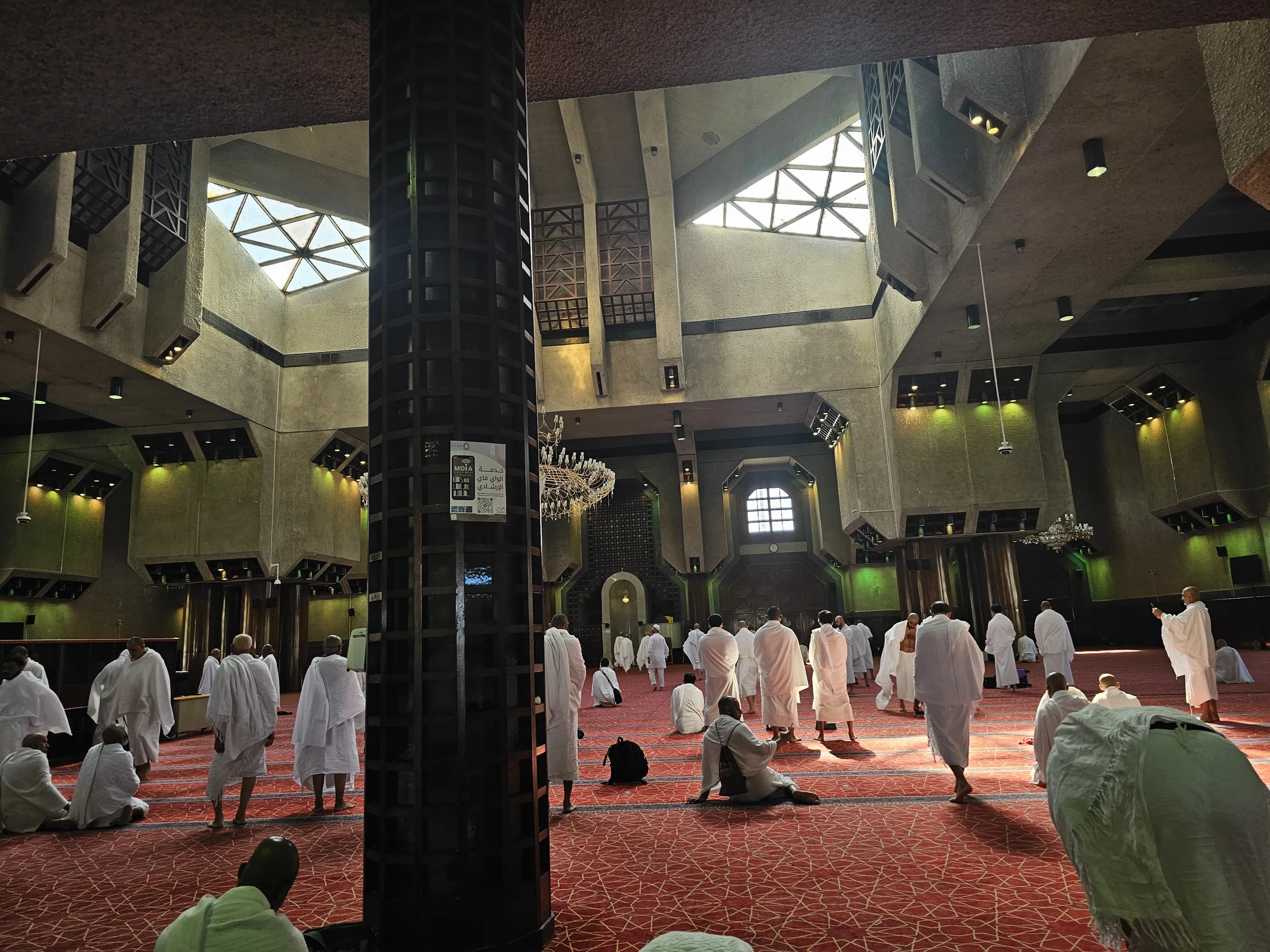
- Prepare at your hotel. Clip nails, remove unwanted hair and take a bath (ghusl) if you can. Men may change into the two Ihram sheets at the hotel; this is only wearing the clothes, not entering Ihram.
- Travel to the mosque. Keep your hotel card, phone and a small bag for your slippers.
- Do wudu or ghusl before entering Ihram if needed. Washing and changing facilities are available around the site. Women who are menstruating can enter the state of Ihram from the Hil without entering the mosque or praying; seek guidance on mosque access from your scholar.
- Change into Ihram clothing if you have not already. Men wear the two Ihram sheets and suitable footwear. Women wear normal modest clothing; there is no special white Ihram outfit for women. Clothing and face-covering details should follow the guidance of your school of law.
- If following Hanafi guidance, pray two rak’ahs before entering Ihram when voluntary prayer is allowed; these are recommended, not a condition for Ihram. A prescribed prayer can suffice. Women who are menstruating do not pray.
- Make the niyyah for Umrah. For example: "O Allah, I intend to perform Umrah; make it easy for me and accept it from me." You can say it in Urdu or Arabic.
- Recite the talbiyah. "Labbaik Allahumma labbaik…" Men say it aloud; women say it quietly. From this moment, the rules of Ihram apply.
- Return to Masjid al-Haram and complete Tawaf, Sa'i and hair shaving or trimming. Our guide to the farz, wajib and sunnah acts of Umrah walks through each rite.
Practical tips for Pakistani pilgrims
- Allow for crowds. Traffic and access can change around prayer times, weekends and busy Umrah periods. Ask your hotel or group guide about conditions on the day.
- Plan around prayer times. Leave enough time to get back for the next prayer. Traffic near the Haram slows down sharply before Jumu'ah.
- Bring your own Ihram. Ihram sheets and slippers are usually sold near the mosque, but quality and prices vary.
- Travel together. A pre-booked taxi can make the journey easier for elderly parents and families. Compare the total return fare with the bus cost for your group and confirm walking distances and vehicle access.
- Women in menstruation can enter Ihram at Masjid Aisha and wait in their hotel until they are pure before performing Tawaf, just as Aisha (RA) did.
- Carry water and your hotel address in Arabic, especially if you are travelling alone.
Other places to enter Ihram from Makkah
Masjid Aisha is the closest and most convenient point in the Hil, but it is not the only one. Any place outside the Haram boundary is valid for someone in Makkah. Two other known sites are:
- Al-Ji'ranah: northeast of Makkah, where the Prophet ﷺ entered Ihram for Umrah after the Battle of Hunain.
- Al-Hudaybiyyah (Ash-Shumaisi): on the old Jeddah road, the site of the Treaty of Hudaybiyyah.
Both are further away, so most pilgrims choose Masjid Aisha. Some add Ji'ranah or Masjid Aisha to their Makkah ziyarat; our list of places to visit in Makkah and Madinah during Umrah covers the sites families most often combine on one trip.
Planning time for more than one Umrah
Whether you have time for another Umrah depends mostly on how long you stay in Makkah. A short trip is usually split between Makkah and Madinah, which leaves little spare time once you add rest and prayers in the Haram. Pilgrims who hope to perform an extra Umrah from Masjid Aisha, or simply want a slower pace with elderly parents, often choose a 15 days Umrah package or longer.
If you are still comparing durations and hotel categories, you can see all our Umrah packages from Pakistan in one place, from 7 to 28 days.
Frequently asked questions
What is Masjid Aisha?
Masjid Aisha, or Masjid Taneem, is a mosque about 7.5 km north of Masjid al-Haram. It marks the place where Hazrat Aisha (RA) entered Ihram for Umrah, and pilgrims already in Makkah use it to enter Ihram for another Umrah.
How far is Masjid Aisha from the Haram?
It is about 7.5 km north of Masjid al-Haram, on the Makkah–Madinah road. By car it takes about 15–25 minutes, depending on traffic.
Can I enter Ihram for my first Umrah at Masjid Aisha?
If you are arriving from outside the miqat already intending Umrah, you must enter Ihram before crossing that miqat; waiting until Masjid Aisha is not the correct procedure. Someone already lawfully in Makkah has a different situation, so “first” versus “second” alone does not determine the ruling.
Is Masjid Aisha inside the Haram?
No. It is in the Hil, just outside the Haram boundary. That is why entering Ihram there is valid for someone staying in Makkah.
Which bus goes to Masjid Aisha?
The RCMC Route 2 timetable lists Terminal 1 (Jabal al-Ka’bah) and Ayesha Mosque. The operator lists SAR 4 for a single regular-route ticket. Confirm the current route and stop in the Makkah Bus app before travelling.
Can women enter Ihram at Masjid Aisha during menstruation?
Yes. Menstruation does not prevent entering the state of Ihram. Women can make their intention and recite talbiyah from the Hil, without entering the mosque or praying, and wait until they are pure before Tawaf.
How many times can I perform Umrah from Masjid Aisha?
Hanafi scholars permit additional Umrahs, but other scholars discourage or do not permit repeating them during the same journey. Follow qualified scholarly guidance and complete each Umrah properly.
Do I need to pray two rak'ahs at Masjid Aisha?
Two rak'ahs before Ihram are recommended, not compulsory. Skip them during the times when voluntary prayer is disliked.
Is Masjid Aisha open all the time?
Yes. The mosque is open 24 hours a day.
Final word
Masjid Aisha serves people already in Makkah who need to leave the Haram boundary to enter Ihram for Umrah. It does not replace the outer miqat for arriving pilgrims who already intend Umrah. Prepare your Ihram before arrival, complete your rites properly and follow trusted scholarly guidance if considering another Umrah.
For help planning your Umrah from Pakistan, including your stay, hotels and transport in Makkah, contact Uniworld Travel & Tours on WhatsApp.
Featured photo: Imam Khairul Annas / Wikimedia Commons, CC BY-SA 4.0. Resized and converted to WebP.